The animal kingdom is full of surprises.
Just when you think you’ve seen it all, nature reveals creatures so strange you’ll wonder how they even exist.
From fish that walk on land to frogs that give birth through their skin, these weird animals challenge everything we know about life on Earth.
Get ready to meet some of the most unusual, fascinating, and downright bizarre species our planet has to offer.
1. The Platypus

The platypus looks like someone threw darts at a board of animal parts and said, “Let’s make one of those.” Duck bill? Check. Beaver tail? Sure. Venomous spurs? Why not.
This Australian oddball lays eggs like a reptile but produces milk like a mammal – except it doesn’t have nipples, so it just sweats milk for babies to lap up.
The wild part is that males have venomous spurs on their back legs, which they use during mating season to fight other males. The venom won’t kill you, but it’ll cause serious pain and swelling.
It hunts completely underwater with its eyes, ears, and nostrils closed, using an electroreceptive bill to find prey by detecting electrical fields.
The platypus has no stomach – its esophagus connects directly to its intestines. Efficient? Sure. Weird? Absolutely.
2. The Mantis Shrimp

The mantis shrimp is basically what happens when nature decides to create the ultimate warrior and gives it superpowers most of us didn’t know were possible.
This creature can punch at 50 mph – that’s faster than a professional baseball pitch, delivering a force equivalent to a .22 caliber gunshot. The impact is so violent it creates cavitation bubbles that collapse with shockwaves hotter than the surface of the sun.
But that’s just the physical combat ability. The real flex is its eyes.
While you’re stuck with three types of color receptors (red, green, blue), the mantis shrimp has up to 16. It can see ultraviolet, visible, and polarized light simultaneously – basically giving it a superhuman perception of reality.
There are two types: spearers (which stab soft prey like worms) and smashers (which obliterate everything else).
They can see colors and light frequencies that literally don’t exist in human perception. Imagine seeing an entire spectrum of reality you’ve never experienced.
3. The Aye-Aye

The aye-aye is a nocturnal lemur from Madagascar that looks like a furry gremlin had a baby with a demon, and honestly, that’s being generous.
Its most distinctive feature is that freakishly long, skeletal middle finger, it’s disproportionately thin and used for a hunting technique called “percussive foraging.”
The aye-aye taps on wood up to eight times per second, listens for echoes, and uses that bony finger to extract grubs from tree cavities.
It has rodent-like teeth that grow continuously, similar to a rat or beaver. Combined with the skeletal finger and massive ears, this lemur is basically nightmare fuel.
Here’s the kicker: aye-ayes also use that long finger to pick their noses. Yes, primates have poor hygiene practices too.
They’re the only nocturnal primate and one of the few primates with claws instead of nails.
People in Madagascar traditionally hunt and kill aye-ayes because they believe them to be bad omens. This superstition has threatened their already-limited population.
4. The Babirusa

The babirusa, an island wild pig, is known for its striking curved tusks and unique appearance
The babirusa is a wild pig from Indonesian islands that looks like nature ran out of ideas halfway through the design process.
Its tusks are absolutely unhinged, literally. The upper tusks grow downward and then curve back upward, sometimes piercing its own skull and forehead if they grow long enough.
Scientists still aren’t entirely sure why babirusas evolved these dangerous tusks that could literally kill them. The best guess is sexual selection, males with bigger, weirder tusks win fights against other males and attract females.
Despite being a pig, the babirusa has a deer-like body with long, slender legs. It weighs around 200 pounds and looks like someone photoshopped a pig’s head onto a gazelle’s body.
They’re mostly vegetarian, eating fruits, leaves, and occasionally small animals. They’re not aggressive hunters, just awkwardly built pigs with dangerous facial hardware.
The babirusa is critically endangered, with habitat loss and hunting being the primary threats.
5. The Blobfish

The blobfish holds the title of “World’s Saddest Fish” and honestly, looking at it makes you want to send it a sympathy card.
It lives in the deep sea where pressure is crushing, so its gelatinous body is perfectly adapted to those conditions. When brought to the surface, the pressure change causes its body to collapse into a droopy, sad-looking blob.
This fish isn’t actively hunting, it just floats passively and eats whatever drifts into its mouth. Energy conservation taken to the extreme.
The blobfish has no bones or muscles, just a gelatinous body that’s slightly less dense than seawater, allowing it to float with minimal effort.
At depth, it probably looks relatively normal, but those deep-sea pressure conditions are so extreme that bringing one to the surface is basically decompression sickness for fish.
Its existence is proof that the deep ocean is still full of creatures we barely understand.
6. The Aye-Aye Look-Alike: Hairy Frog

Male hairy frogs develop hair-like skin projections during breeding season, which aren’t actually hair but specialized respiratory skin extensions.
The most metal feature is that this frog can deliberately break the bones in its fingers and push them through the skin to create claws for defense.
Once the threat passes, the claws retract and the skin heals. It’s like having a built-in switchblade.
Found in Central African swamps, the hairy frog is relatively rare and still poorly understood by scientists.
7. The North American Horned Lizard

This lizard has an absolutely insane defense mechanism: it shoots blood from its eyes up to nine times its body length.
The blood is filled with toxins collected from a diet of venomous ants, making it extra nasty for predators.
Additionally, it can inflate its body to double its size, has spiky armor covering its entire body, and blends into its surroundings perfectly.
It’s basically a tank with five different defense systems.
8. The Satanic Leaf-Tailed Gecko

This Madagascar gecko is so good at camouflage that it literally looks like a dead leaf stuck to a tree.
It mimics the exact shape, color, vein patterns, and even the “tears” in leaves, making it nearly invisible when motionless.
The gecko flattens its entire body against surfaces and can remain perfectly still for hours, waiting for prey or avoiding predators.
It’s an evolutionary masterpiece of deception.
9. The Bombardier Beetle

When threatened, this beetle mixes chemicals from specialized glands to create a boiling-hot spray ejected from its abdomen.
The spray reaches temperatures close to 100°C and exits with a loud popping sound, accompanied by a cloud of toxic gas.
The beetle can aim this spray with incredible precision and discharge it in rapid bursts.
It’s basically carrying biological explosives for self-defense.
10. The Red-Lipped Batfish

With its bright red pout, protruding snout, and spindly little “legs,” the red-lipped batfish looks like a character from a Tim Burton film.
Those “legs” are actually highly adapted fins, and although it’s a poor swimmer, it walks along the seafloor quite efficiently.
The snout extends upward from its head and is actually a chemical-emitting organ designed to lure prey toward its mouth.
It’s basically a combination of features no other fish has bothered to evolve.
11. The Tarsier

The tarsier has eyes as large as its entire brain, the largest eyes relative to body size of any mammal.
Despite these massive eyes, it can’t move them like we do, so it rotates its entire head 180 degrees like an owl.
This nocturnal hunter is the only completely carnivorous primate, zero plants in its diet, just insects and small prey.
It’s one of the oldest living primates, dating back at least 55 million years.
12. The Axolotl

The axolotl is commonly called the “Mexican Walking Fish,” but it’s actually an amphibian with permanent external gills.
Those branching structures extending from its head aren’t decorative, they’re fully functional gills that stay exposed their entire lives.
What makes it weird is that axolotls retain juvenile features throughout their entire adult lives, a phenomenon called neoteny.
They can regenerate entire limbs, eyes, and even portions of their heart and brain, making them biological superstars for medical research.
13. The Anglerfish

Female anglerfish have a bioluminescent lure dangling from their head, using bacteria to create light that attracts prey in the pitch-black ocean.
When prey swims toward the light, it gets sucked into the anglerfish’s enormous mouth, which can expand to fit prey larger than itself.
Male anglerfish are tiny in comparison and attach permanently to females, fusing their bodies together and effectively becoming a permanent reproductive appendage.
The entire breeding strategy is basically the ocean’s weirdest romance.
14. The Bird-Dropping Spider

This spider doesn’t look like a bird dropping, it looks like one that’s fresh and wet, complete with glossy texture.
Predators see it and think “nope, that’s not food,” so they leave it alone.
At night, the spider stretches out its legs and releases pheromones that attract male moths looking for mates.
The moths are immediately captured and consumed, making this spider a master of bait-and-switch hunting.
15. The Pangolin

Pangolins are the only mammals completely covered in keratin scales, the same material as human fingernails.
When threatened, they curl into an impenetrable ball that predators literally cannot penetrate.
They have no teeth and use incredibly long, sticky tongues to capture ants and termites.
Sadly, they’re the most trafficked mammals on the planet, hunted for their scales and meat.
16. The Kakapo

The kakapo is a flightless, nocturnal parrot from New Zealand that weighs up to 9 pounds, making it one of the heaviest parrots alive.
Its soft, mossy green feathers and owl-like face make it look like something from a fantasy novel.
Unlike most birds, it has a strong, musky odor that makes no evolutionary sense for a nocturnal creature.
It’s so critically endangered that conservation efforts track every individual bird.
17. The Slow Loris

The slow loris is one of the only venomous primates on Earth, producing venom from glands in its armpits.
It mixes this venom with saliva to create a toxic bite that can cause anaphylactic shock in predators.
Despite being venomous, it’s incredibly slow and deliberate in its movements, hence the name.
Its enormous eyes and nocturnal lifestyle make it look like a tiny, defenseless creature, which makes the venom capability even more surprising.
18. The Star-Nosed Mole

This mole has 22 pink, tentacle-like appendages around its nose, basically a star-shaped flesh antenna.
These appendages are covered in sensory receptors and allow the mole to navigate and hunt completely underground in total darkness.
It’s the fastest-eating mammal, consuming prey in about 230 milliseconds.
The star-shaped nose is so sensitive and information-rich that it’s basically a biological supercomputer for underground navigation.
19. The Okapi

The okapi looks like someone glued zebra stripes onto a giraffe’s body, but it’s actually its own species.
It has stripes only on its legs and rear, giving it a completely bizarre appearance.
The okapi was only scientifically documented in 1901, despite being relatively large, proof that undiscovered animals still exist.
It uses its long tongue (up to 18 inches) to grab leaves and bark from trees.
20. The Glass Frog

Some glass frog species are so transparent you can see their internal organs, including their beating heart and eggs.
This transparency acts as camouflage against predators looking from below, they literally can’t see a frog suspended above them.
The frog’s eyes appear to glow bright green or yellow, making it identifiable despite its transparency.
21. The Seahorse

Seahorses are the only fish species where the male becomes pregnant, carrying fertilized eggs in a special brood pouch.
The male provides oxygen and nutrients to the developing babies, essentially acting as a living placenta.
Seahorses are completely monogamous and mate for life, swimming together daily in synchronized movements.
Despite their gentleness, they’re absolutely terrible swimmers and anchor themselves to seagrass to avoid getting swept away.
22. The Coconut Crab

This crab can weigh up to 9 pounds and has a leg span of nearly 3 feet, making it one of the largest arthropods on Earth.
It can climb trees and crack open coconuts with its powerful claws, hence the name.
The coconut crab has the strongest grip strength of any creature relative to its size.
Its only natural predator is the eagle, and it’s been known to drag prey much larger than itself away.
23. The Dumbo Octopus

This octopus lives at depths where pressures would crush a human instantly, yet it survives comfortably.
It has ear-like fins that resemble the Disney character Dumbo, hence the name.
At those extreme depths, it’s incredibly slow-moving and rarely encounters other creatures.
It’s one of the few animals humans have only ever observed via deep-sea camera footage.
24. The Frill-Necked Lizard

When threatened, this lizard extends a massive frill of skin around its neck, making it appear three times its actual size.
The bright coloring on the inside of the frill is meant to intimidate predators.
If intimidation fails, it hisses and runs toward the nearest tree, hoping to climb away.
The frill-necked lizard is basically wearing a biological cape for defense.
25. The Vampire Bat

Vampire bats don’t hunt large prey, they feed on the blood of birds, particularly chickens and pigeons.
They have specialized enzymes in their saliva that prevent blood from clotting, allowing them to lap up meals like tiny, flying vampires.
They can fly just fine despite losing blood, but they’re incredibly dedicated to sharing meals with colony mates.
If a bat hasn’t eaten in two days, other bats will regurgitate blood to feed it, basically blood-based friendship.
26. The Goblin Shark

With a long, sword-like snout and protruding jaws, the goblin shark looks like it time-traveled from the Cretaceous period.
It lives in the deep sea and rarely surfaces, so scientists know almost nothing about its behavior.
Its snout is covered in sensory organs that detect electrical signals from prey.
Every time one is captured, scientists treat it like finding a living dinosaur.
27. The Proboscis Monkey

Male proboscis monkeys have absolutely enormous noses that can reach 4 inches in length.
Scientists believe the nose size is a sexual display, larger noses are apparently attractive to females.
The nose also helps amplify calls, making the monkey’s vocalizations deeper and more intimidating.
Females actually prefer the biggest-nosed males, which is basically the opposite of typical beauty standards.
28. The Panda Ant
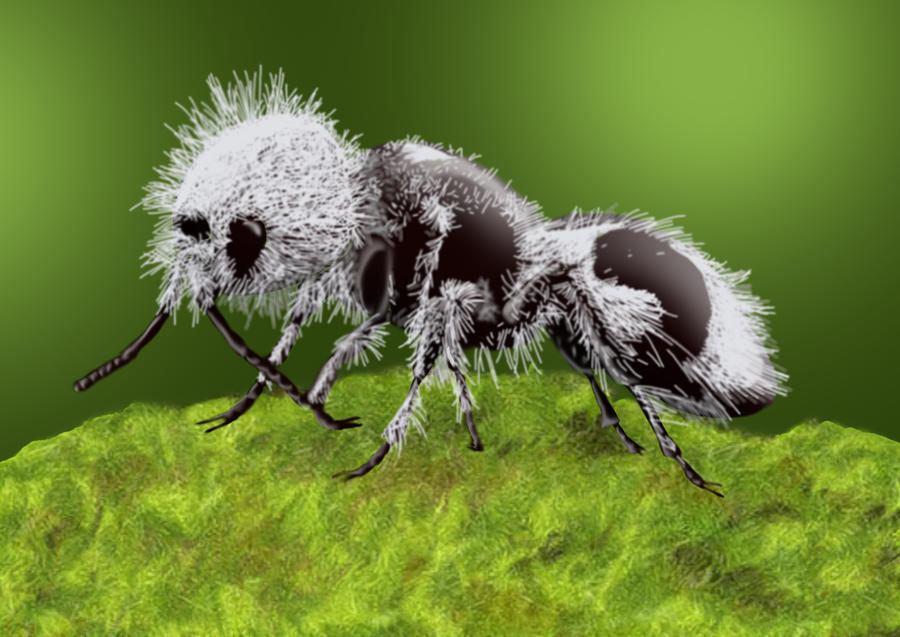
Despite looking like a tiny, adorable panda, the panda ant is actually a wingless wasp with one of the most painful stings in the insect world.
The sting causes intense pain that can last for up to 12 hours, earning it the nickname “cow killer.”
It blends into soil and vegetation, making it easy to accidentally step on and learn this lesson the hard way.
The fuzzy appearance is basically nature’s way of deceiving humans into thinking something cute is actually a biological weapon.
29. The Mimic Octopus

This octopus can impersonate over 15 different species, changing its shape, color, and texture instantly.
It’s the only known animal capable of mimicking such a vast range of different creatures,not just colors or patterns, but entire body shapes.
Scientists still don’t fully understand how its nervous system coordinates these rapid-fire transformations.
It’s basically the James Bond of sea creatures, capable of becoming anyone at any moment.
Final Thoughts
These 29 animals have figured out something important: Mother Nature is endlessly creative, and evolution can take some absolutely wild directions.
While we’re out here worrying about following trends and fitting in with society, these creatures are living their best lives being completely, unapologetically bizarre.
They’re not trying to be “normal” they’ve adapted to their specific environments in ways that sometimes defy logic.
Maybe that’s the real lesson here: being weird isn’t a flaw, it’s a survival strategy.
The next time someone tells you to be “normal,” just remember that the most successful animals on Earth are the ones brave enough to be completely, utterly strange.
These creatures are thriving in their habitats, dominating their food chains, and surviving for millions of years by doing things absolutely nobody expects them to do.
Sometimes the smartest thing you can be is delightfully, unapologetically weird. These animals are living proof.
You May Also Like
Daeodon: Everything You Need to Know About the “Hell Pig”
Resources – (for further reading)
Wikipedia – Platypus | Mantis Shrimp | Aye-Aye | Babirusa
National Geographic – Mimic Octopus Facts
International Fund for Animal Welfare – Pangolin: Facts, Threats & Conservation

Brittney , a devoted exotic pet enthusiast, showcases her profound passion for the animals through her role as a veterinary technician. With a strong background in caring for a diverse array of animals, she shares her expertise by crafting engaging articles about exotic pets for our blog.