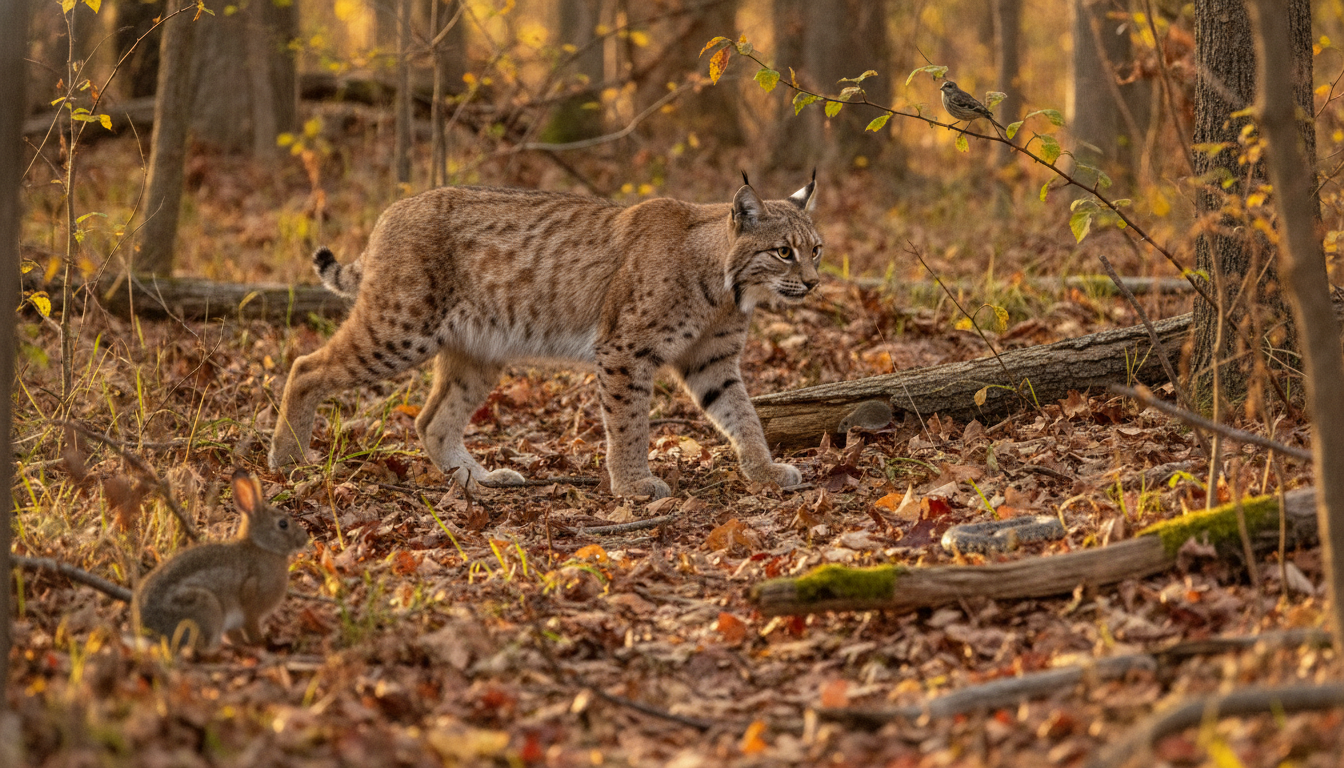
What do bobcats eat? Mostly rabbits and hares, but these adaptable North American predators also hunt mice, voles, squirrels, birds, reptiles and other small animals. Their menu changes with habitat, season and whatever prey is easiest to catch.

The main foods in a bobcat’s diet
Bobcats are strict carnivores. In many parts of North America, rabbits and hares are the most important prey, especially cottontails. They are large enough to provide a substantial meal but small enough for a solitary cat to overpower. The Smithsonian’s National Zoo identifies rabbits and hares as the bobcat’s primary food, while noting that the cats also take rodents, birds, snakes and lizards.
Small mammals round out the menu. Mice, voles, rats, squirrels, chipmunks, muskrats and opossums may all become prey. Regional studies show why it is risky to describe one fixed bobcat diet: in an Illinois analysis, small rodents made up 32.8 percent of identified food items, followed by rabbits at 22.7 percent, squirrels at 19.3 percent and birds at 10.1 percent. In another landscape, rabbits may clearly dominate.
Bobcats can also catch ground-nesting birds, quail, turkeys and other birds. Reptiles such as snakes and lizards are occasional meals, particularly where they are abundant. Insects are less important, but an opportunistic predator may take them when the energy cost is low.
Do bobcats eat deer?
Yes, but deer are not the everyday staple people sometimes imagine. An adult deer is far too large and dangerous for a bobcat to routinely hunt. Bobcats may take a very young fawn in unusual circumstances, but they are more likely to scavenge from a deer carcass when one is available. Deer remains can be especially valuable in winter, when smaller prey is harder to find.
Why rabbits are a favorite
Rabbits occupy the same habitat edges that bobcats use as hunting lanes: brushy borders, grassy openings, fencerows, stream corridors and young forest. These places provide cover for an ambush predator and food for its prey. A bobcat can wait quietly, make a short explosive rush and then retreat into vegetation.
That relationship also explains why a bobcat’s diet can look different from one region to the next. A cat living near productive rabbit habitat may eat mostly cottontails. Another living in a fragmented woodland may rely more heavily on squirrels, mice or birds. Diet is a snapshot of the local food web, not a universal shopping list.
How the menu changes by season
Spring and summer can bring abundant young rabbits, rodents and ground-nesting birds. In autumn, squirrels and other small mammals may be easier to locate, while migrating or concentrated birds add opportunities. Winter can push bobcats toward whatever remains available: rabbits, rodents, birds and carrion.
Climate and geography matter too. A bobcat in a desert scrubland may encounter more reptiles, while one in a wetland can find muskrats and water-associated birds. This flexibility is one reason the species can live in forests, swamps, farmland edges and even some suburban landscapes, provided prey and protective cover remain connected.
How bobcats find and capture food
Bobcats are ambush hunters, not endurance runners. They move silently through cover, pause to listen and use camouflage to get close. They are excellent climbers and can sprint at up to about 30 miles per hour over short distances, but stealth usually matters more than speed. They are often most active around dawn and dusk.
After a successful kill, a bobcat may eat at the site or drag smaller prey to a safer location. It does not need to kill every day; the amount it eats depends on prey size, opportunity and the cat’s energy needs. A mother raising kittens has different demands from a solitary adult defending a territory.
If you are comparing this diet with the animal’s appearance, see our guide to what bobcats look like. You can also learn where bobcats live and why habitat edges matter, or read about when bobcats are most active.
People also ask: bobcat diet FAQ
What is a bobcat’s favorite food?
Rabbits and hares are generally the closest answer, especially cottontails. However, local availability can make rodents, squirrels or birds more important in a particular territory.
Do bobcats eat cats and dogs?
They can. Bobcats may prey on very small unattended pets, poultry and other domestic animals, although wild prey is their normal food. Keep small pets indoors or supervised, especially near brush and at dawn or dusk, and never feed or approach a wild bobcat.
Are bobcats carnivores?
Yes. Bobcats are carnivores and obtain their food from animal prey or carrion. Plants are not a meaningful part of their normal diet.
Do bobcats eat snakes?
Yes, snakes and lizards are occasional prey. They are usually a supplement to a diet dominated by mammals rather than the main food source.
Do bobcats hunt every night?
They may travel and hunt at night, but activity is not limited to darkness. Bobcats are often crepuscular, meaning dawn and dusk are especially important hunting periods, though they can be active during the day or night.
Bottom line: bobcats are flexible, stealthy carnivores. Rabbits are often the centerpiece of the diet, but healthy landscapes give them a much broader menu of rodents, squirrels, birds, reptiles and occasional carrion.
